Rent vs Buy in 2026: Your Guide to Making the Right Choice
One of the biggest decisions you'll make as a young adult is whether to rent or buy a home. And I'll tell you from my experience as a real estate agent here in Danvers, the decision has become more nuanced than ever before.
Five or ten years ago, the answer seemed obvious for many people. You buy a home, build equity, and let appreciation do the heavy lifting toward retirement. But the math has shifted. Higher mortgage rates, increased home prices, and changing life circumstances mean this decision now requires genuine thought rather than reflexive action.
The good news? The housing market in 2026 is more balanced than it's been in years, which actually makes this an ideal time to think clearly about what's right for you. Let me break down the real pros and cons of each option, and then I'll share why homeownership still makes compelling sense for many people.
The Case for Renting
Let's start with renting because it genuinely has real advantages, especially in certain life stages.
Lower Upfront Costs When you rent, you'll typically just need to provide a security deposit along with your first month's rent. That's considerably less money than the substantial down payment and closing costs that come with buying a home. If you're just starting out or rebuilding your savings, renting gives you breathing room.
Maximum Flexibility Renting gives you flexibility. It's typically easier to break a lease than it is to sell a house. If you may move in the near future, renting could be the safer financial move. This matters if your career could require relocation, if you're testing out a new city, or if your life is genuinely in flux. That flexibility has real value.
No Maintenance Headaches When something breaks, your landlord usually handles maintenance. As a renter, you avoid surprise repair bills, property taxes, and major home upkeep. There's something liberating about not getting that 2 a.m. call about the heating system failing.
Potential for Lower Monthly Costs Renting is often cheaper month-to-month in 2026, but buying can build more wealth over time if you stay long enough. On a pure monthly payment basis, rent in many markets is still lower than owning a comparable property.
The Real Drawbacks of Renting
But here's where renting loses its appeal pretty quickly:
Zero Equity Building First, you build no home equity, which means you never get a property of your own. Every single payment vanishes into your landlord's account. There's no asset at the end. No wealth accumulation. Nothing.
Rising Rent Payments Rent can also rise. Unlike a fixed mortgage payment, rent may increase every year. That can reduce financial stability. In some counties, renters are seeing steady increases each year. A lease that feels manageable today could cost much more in three years. You have zero control over this.
Limited Control and Uncertainty Above all, your control is limited: you can't freely make renovations, and your landlord holds the power to choose whether or not to renew your lease. This uncertainty can be unsettling. You're never truly secure in a rental.
The Case for Buying
Now let's talk about why buying a home remains one of the most powerful wealth-building tools available.
Building Real Equity Building home equity is a powerful financial advantage of homeownership. Think of it as a built-in savings plan: every time you make a mortgage payment, you're investing in your own asset. The principal portion of your payment chips away at your loan balance, steadily increasing the stake you own in your property. Unlike renting, your money is working toward something tangible.
Stable, Predictable Payments A fixed-rate mortgage offers consistent principal and interest payments, providing stability over time. With inflation, that fixed payment becomes an even better deal as time goes on. Your housing cost doesn't surprise you every year like rent does.
Long-Term Wealth Potential Real estate has the potential to appreciate in value over time. While not guaranteed, historical trends have shown that, on average, property values tend to increase over the long term. Appreciation in property value can lead to significant wealth accumulation for homeowners, resulting in a higher net worth. Over five, ten, or twenty years, this compounds significantly.
Tax Advantages Homeowners can deduct interest expenses on up to $750,000 of mortgage debt from their income taxes, though when they itemize these deductions, they forgo the standard deduction. Depending on your situation, these deductions can save you real money. Talk to your tax professional about what applies to your specific situation.
Control and Customization You can paint, renovate, and customize however you want. You may also qualify for tax breaks and can even earn extra income by renting out part of your home. Your home becomes an expression of who you are, not just a place to sleep.
Security and Belonging Owning a home can foster a stronger sense of community and belonging. Homeowners tend to stay in one place longer than renters, which can lead to deeper relationships with neighbors and a greater investment in the local community. This stability is particularly beneficial for families, as it provides a consistent environment for children to grow up in and attend the same schools. There's something deeply valuable about putting down roots.
The Challenges of Buying
I wouldn't be honest if I didn't address the real costs of homeownership.
Higher Upfront Costs Owning a home introduces higher upfront and ongoing costs — including a down payment, closing fees, property taxes, insurance, and maintenance. This is real, and it matters. You need to be financially ready.
Less Flexibility Selling a home can be a costly and time-consuming process. It becomes even more stressful if you're in a hurry to sell due to unexpected events such as a job transfer, a family move, or other urgent life changes. Preparing the property, finding buyers, and navigating negotiations can add to the pressure. Buying isn't for people whose lives are still in major flux.
Maintenance Responsibility You own the maintenance and the costs that come with it. That water heater will fail when you can least afford it. Roofs need replacing. HVAC systems need servicing. These are your problems now, and they're expensive.
The Numbers Actually Matter
Here's what I've learned talking to hundreds of people in the Danvers area about this decision:
In most U.S. markets in 2026, buying a home only makes financial sense if you're planning to stay at least five to seven years in the home. This is the key threshold. If you're not planning to stay at least five to seven years, the math favors renting. Transaction costs eat any equity you build.
Currently, 30 year fixed mortgages are hovering around 6.5% or slightly higher. The national median home price has risen to nearly $420,000. These are real constraints. But here's the thing: they're stable. The wild uncertainty of recent years has calmed down.
The average homeowner is 43 times as wealthy as the typical renter, with homeowners' median net worth at $430,000, compared to just $10,000 for renters. That gap didn't appear by accident. It's the result of decades of equity building.
What Should YOU Do?
This isn't a universal answer, and anyone who tells you there's one right choice is oversimplifying.
You should probably keep renting if:
- You're uncertain where you'll be in three years
- You don't have an emergency fund and a genuine down payment saved
- Your income is unstable or likely to change
- You're still figuring out what kind of living situation makes you happy
- You have no interest in home maintenance or property management
You should seriously consider buying if:
- You're planning to stay in one place for five to seven years or longer
- You have a stable income and solid emergency savings
- You can afford a responsible down payment without wiping out your reserves
- You're ready to build wealth instead of just paying someone else's mortgage
- The stability of knowing your housing costs won't spike unexpectedly appeals to you
Why Danvers Makes Sense for Homeownership
As someone who helps people navigate the Danvers real estate market daily, I'll tell you that this is a particularly good time and place to consider buying. Danvers offers walkable neighborhoods, strong schools, reasonable appreciation history, and genuine community. It's not one of those overheated coastal markets where the math breaks down completely.
Markets likely to appreciate most: Midwest (affordable), Southeast (population inflow), and suburbs (remote work trend). The North Shore of Massachusetts fits this pattern. People are looking for communities with character, good schools, and access to employment centers. That describes Danvers.
When you buy here, you're not just hoping for appreciation. You're buying into a real community where you can build relationships, where your kids can grow up, where you contribute to something larger than yourself.
The Bottom Line
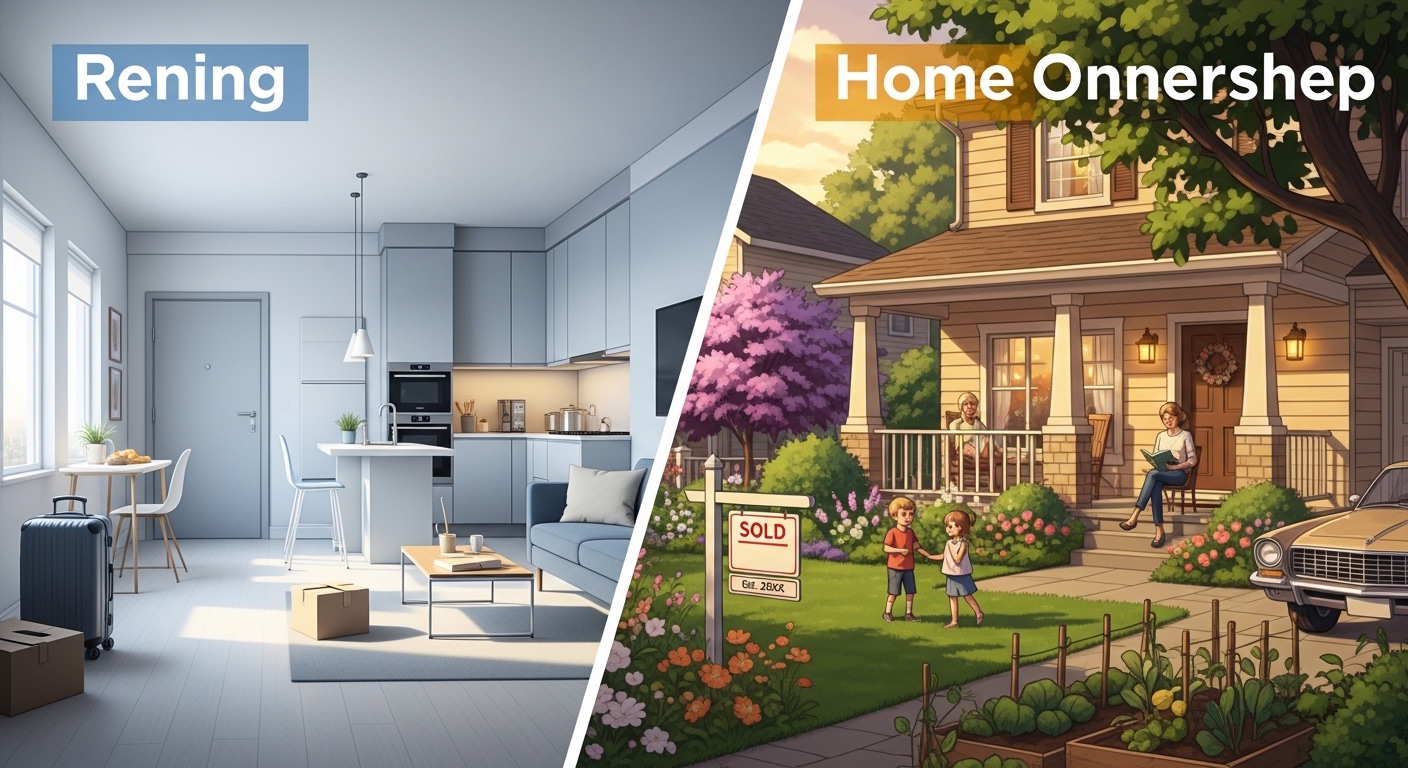
Both renting and buying serve legitimate purposes at different life stages. Renting offers flexibility and simplicity. Buying offers security, wealth building, and control. The question isn't which is objectively better. It's which aligns better with where you are right now and where you're headed.
If you're leaning toward buying, or even just curious about whether the numbers work in your favor, I'd encourage you to sit down with someone who knows your local market. Use HOUSEJET to explore what's actually available in your price range right now. Run the numbers. Talk to a mortgage professional who understands your specific situation.
The 2026 market has given us a gift: clarity. It's not the panic-driven extremes of recent years. It's a market where clear thinking actually pays off.
If you're in the Danvers area and want to talk through whether homeownership makes sense for you, I'm here for that conversation. No pressure, no sales pitch. Just honest talk about the numbers and what they mean for your life.
Because this decision shapes the next five to ten years of your life. It's worth getting right.